Cloud Migration Checklist for Enterprise Teams
By VORTEXA Engineering Team ·

Cloud migrations fail more often from poor sequencing than from technical limitations. Here's the checklist we run through with every enterprise client before touching production infrastructure.
Phase 1: Assessment
- Inventory all current infrastructure, dependencies, and data flows
- Identify compliance and data residency requirements
- Establish baseline performance metrics before migration
Phase 2: Planning
Choose between a lift-and-shift, re-platform, or full re-architecture approach based on your timeline and risk tolerance — lift-and-shift is fastest but leaves efficiency gains on the table.
Phase 3: Execution
- Migrate non-critical systems first to validate the process
- Run parallel environments during the transition window
- Maintain a documented rollback plan for every migration step
Phase 4: Post-migration
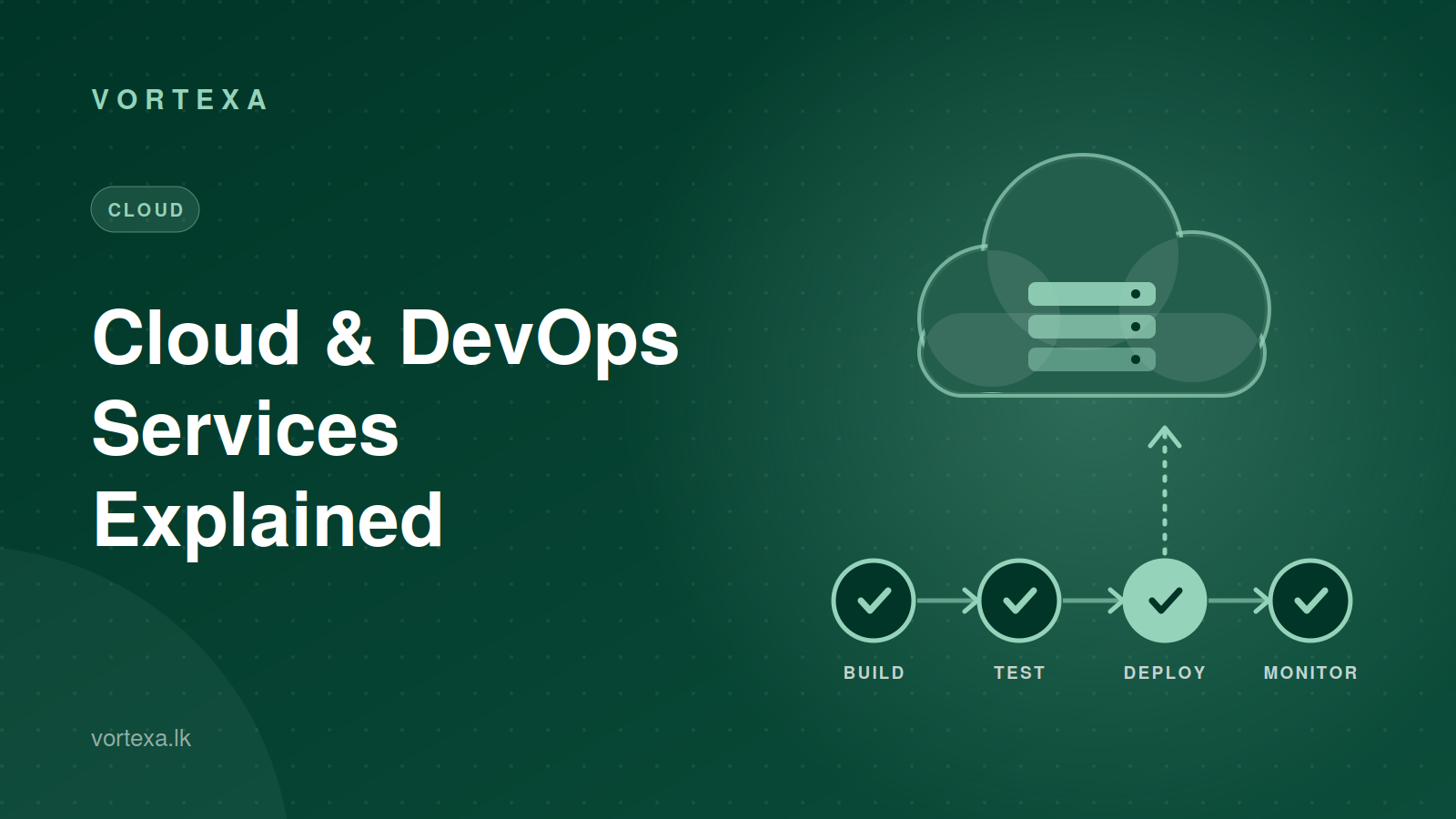
Budget for a 2-4 week stabilization period after go-live for performance tuning and cost optimization — initial cloud spend is almost always higher than the optimized steady state. For what to automate once you're in the cloud, see cloud and DevOps services explained.
Frequently asked questions
What are the main phases of a cloud migration?
Four phases: assessment of current systems and requirements, planning the migration approach, execution in a controlled sequence, and post-migration stabilization with performance and cost tuning.
What is the difference between lift-and-shift, re-platform, and re-architect?
Lift-and-shift moves systems with minimal change and is fastest. Re-platform makes targeted optimizations for the cloud. Re-architecting redesigns for cloud-native services, giving the most long-term benefit with the most effort.
How long should the post-migration stabilization period be?
Plan for roughly 2-4 weeks after go-live to tune performance, fix issues found under real load, and optimize costs.
How do you avoid downtime during a cloud migration?
Migrate non-critical systems first, run parallel environments during the transition, and keep a documented rollback plan for every step so you can revert quickly if something fails.
Will my costs drop immediately after moving to the cloud?
Often not. Initial cloud spend is usually higher than the optimized steady state. Budget for right-sizing, autoscaling, and cost reviews after the migration.
Related services
Cloud Systems
Resilient, cloud-native infrastructure and automated DevOps workflows built for 99.99% uptime, elastic scaling, and total peace of mind.
Custom Software
Bespoke, enterprise-grade software platforms engineered for scale, security, and long-term reliability — from internal tools to consumer-facing products.
API Ecosystems
Rock-solid, secure API layers that power seamless third-party integrations, mobile apps, and internal microservices — built to handle billions of calls.
Planning a project like this?
Tell us what you're building and we'll come back with a clear scope and next steps.